


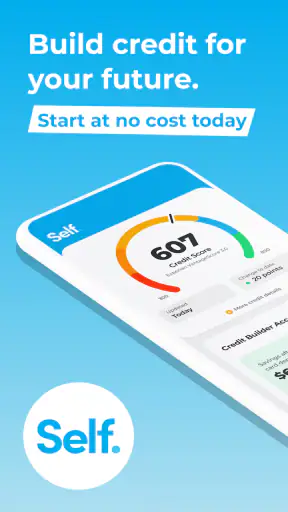
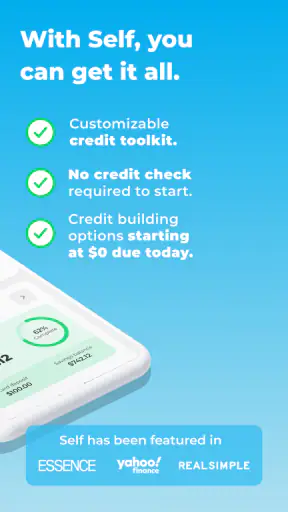
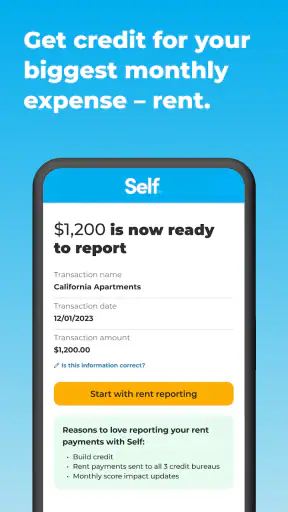

Building credit can feel unfair when the usual tools expect you to already have a credit history. Self takes a different route: its central purpose is to help you work toward stronger credit without requiring a credit check to get started. I found that this makes it most interesting for people who are new to credit, rebuilding after financial problems, or simply looking for a structured way to begin.
Self is a free finance app from Self Financial, Inc. It is available to everyone from an age-rating perspective, and its popularity is easy to understand: it has passed one million installs and holds a 4.7 average from around 102 thousand ratings. Those figures do not automatically make it right for every borrower, but they do suggest that the app has become a familiar entry point for credit-building.
How Self’s credit-building idea feels in everyday use
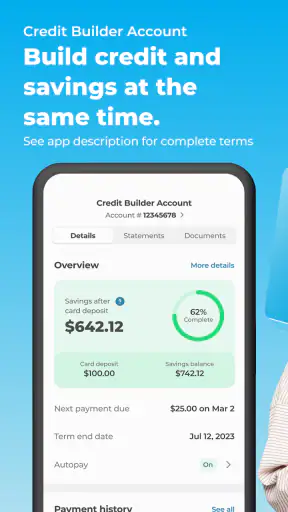
The important thing to understand is that Self is not primarily a budgeting app or a general banking dashboard. Its main value is the relationship between a credit-building plan and the possibility of working toward a credit card. Instead of treating a weak or empty credit file as a reason to turn you away, the app is designed around giving you a path to establish credit behavior.
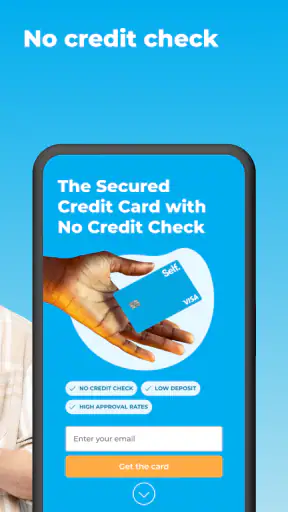
That distinction matters. A conventional credit card can be useful, but approval may depend on an existing score, income details, or a deposit if you choose a secured card. Self is aimed at the earlier stage, when the bigger challenge is proving that you can manage a credit obligation consistently. The no-credit-check starting point removes one of the most discouraging barriers for a first-time applicant.
In my view, the strongest capability here is not a flashy feature. It is the creation of a deliberate routine. You are encouraged to treat credit-building as a planned commitment rather than something that happens accidentally while shopping. That can be valuable for someone who needs structure and tends to lose track of financial goals.
The app also connects the credit-building journey with the idea of a future card. That gives the process a practical direction, although it is important not to read that as a guarantee of approval or a promise of a particular outcome. Credit decisions depend on your circumstances, and a tool that helps you build a record cannot instantly replace time, affordability, or responsible repayment.
What the no-credit-check approach changes
For a person with no established credit, applying for ordinary cards can create a frustrating loop: lenders want evidence of responsible borrowing, but the applicant needs an opportunity to create that evidence. Self’s approach is meant to open that first door without using a credit check as the initial obstacle.
That does not mean the app makes borrowing risk-free. The user still needs to understand the commitment, keep payments manageable, and read the terms carefully before agreeing to anything. The absence of a credit check may make the starting point more accessible, but it should not be mistaken for free money or an effortless score improvement.
I would explain it to a friend this way: Self can help you practice the habits that credit systems reward, but it cannot do the responsible part for you. If your monthly budget is already under pressure, adding a credit-building obligation may create more stress than progress.
Using the app as a planned financial routine
The most useful workflow is to approach Self before signing up, not after. First, decide what you are trying to achieve. Perhaps you want to become eligible for a future card, move beyond having no credit history, or create a more organized repayment habit. Then look at your regular income and essential expenses so you know whether a recurring obligation fits comfortably.
Once you begin, I would keep the app connected to a simple personal routine. Check the account around the same time each month, review what is due, and make sure the payment does not compete with rent, utilities, food, or emergency savings. This sounds basic, but credit-building products work best when they support a stable pattern rather than a last-minute scramble.
A less obvious benefit is that the app can serve as a boundary around your credit goal. With a normal credit card, the available balance can tempt you to spend more than intended. A dedicated credit-building arrangement is easier to view as a fixed project: make the required payments, monitor progress, and avoid treating it as extra spending power.
That narrow purpose is also a limitation. Someone looking for detailed cash-flow planning, investment research, or a complete household finance system will probably need a different app alongside Self. It is better understood as a focused credit tool than as a replacement for every financial service on your phone.
A realistic first-credit scenario
Imagine a young adult who has always used cash or a family member’s card and now needs a credit history for future financial goals. They have regular income, but an ordinary card application feels premature because there is little information for a lender to assess. Self can provide a more approachable starting point, allowing that person to focus on making predictable payments instead of chasing multiple applications.
The best version of this scenario includes a separate reminder system and a small emergency buffer. The user does not wait until payday to discover whether the payment is affordable. They check the commitment against their budget in advance, keep the account in good standing, and resist applying for several other products at the same time.
After building consistency, the user may consider whether working toward a card makes sense. At that point, the right question is not simply “Can I get another card?” It is “Will I use it for a limited purpose, pay it reliably, and avoid carrying a balance that my budget cannot handle?” Self is more useful when it leads to that kind of thinking.
Where it compares well with ordinary alternatives
Compared with applying directly for a mainstream unsecured credit card, Self is more approachable for someone with little or no credit history. The no-credit-check starting point is the clearest difference, and the app’s emphasis on a planned credit-building path may feel less intimidating than submitting applications and receiving repeated rejections.
Compared with a secured card, the decision is more nuanced. A secured card usually asks the user to provide a deposit and then manage purchases and repayments directly. That can be a better fit for someone who wants immediate card spending flexibility and already has money available for the deposit. Self may be more suitable for someone who wants the credit-building process separated from everyday shopping.
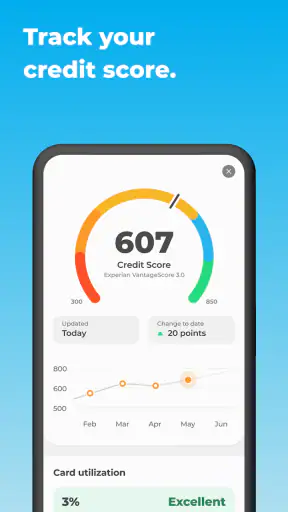
Compared with a credit-monitoring app, Self is more action-oriented. Monitoring can show changes in a credit file, but it does not necessarily give a person a structured way to begin building one. Self focuses on the commitment itself, which is useful when the missing ingredient is not information but an organized first step.
There is a trade-off in that focus. A monitoring service may offer a broader view of credit activity, while Self’s strength is the dedicated pathway. If you already have established credit and mainly want alerts, score tracking, or identity protection, a conventional monitoring product could be more appropriate.
The costs of convenience and the need to read carefully
Self is free to download, but I would not treat the word “free” as a complete description of the financial relationship. The app may introduce you to credit-building products, and any agreement connected with those products deserves the same attention as a bank or card application. Before accepting an offer, inspect the payment schedule, total commitment, fees, and conditions that apply to the specific option shown to you.
This is one of the most important practical limitations: the app’s accessibility can make it feel easy to begin, while the underlying obligation still requires discipline. People who focus only on the absence of a credit check may overlook the fact that missed or unaffordable payments can undermine the purpose of the arrangement.
I also would not use Self solely because you expect a rapid score change. Credit histories develop over time, and results vary with the rest of your financial profile. The app can support a positive pattern, but it cannot control every factor considered by lenders or guarantee that you will qualify for a particular card later.
Another point worth considering is opportunity cost. If you have limited spare money, you may gain more from building an emergency fund, paying down expensive debt, or correcting errors on your credit reports. Self is not a substitute for those priorities. It is most sensible when the payment fits comfortably after more urgent obligations are covered.
Small habits that make the experience safer
I would use a separate calendar reminder even if the app provides account information. The reminder is not about distrusting Self; it is about avoiding dependence on one notification channel. A missed payment can be caused by a changed phone setting, an overlooked message, or a busy week, so a second reminder adds a simple layer of protection.
I would also keep records of the agreement when starting. Save the confirmation details and review statements rather than assuming that every month is identical. This is especially helpful for new borrowers, who may not yet know which figures matter or how to spot a charge they did not expect.
A third useful habit is to delay the next application until you understand your current commitment. The promise of eventually working toward a card can encourage people to apply too quickly elsewhere. In my experience, a slower plan is better: establish the routine first, then reassess whether another product genuinely solves a need.
Finally, use the app as a learning tool rather than a score-chasing machine. Notice how regular payments fit into your budget, how borrowing affects your decisions, and whether you can maintain the routine without cutting essentials. Those observations are more valuable than checking for a dramatic improvement every few days.
Who should consider Self, and who should skip it
Self is a strong candidate for people who are new to credit and want a structured first step without a credit check at the beginning. It can also suit someone rebuilding after financial difficulty who prefers a focused commitment instead of immediately relying on a general-purpose card. The path toward a credit card may appeal to users who want a clear longer-term objective.
I would be more cautious if your income changes sharply from month to month, your essential bills already consume nearly everything you earn, or you are currently missing payments elsewhere. In those situations, the most responsible choice may be to stabilize your budget before adding another financial obligation.
It may also be the wrong choice for a person who already has good credit and wants rewards, travel benefits, a large spending limit, or sophisticated card controls. Self’s central purpose is credit building, not maximizing perks. A conventional card or a secured card could be more useful if you are ready to manage purchases directly and understand the costs.
People who want one app to handle budgeting, savings, investing, bill negotiation, and credit monitoring should set their expectations accordingly. Self has a defined role. Its value comes from staying focused on credit-building rather than trying to become an all-in-one financial command center.
Device support and overall usability
The app was released on March 30, 2018, and its current version is 10.0.0. It supports Android 7.0 and later, which makes it accessible to many users who do not own a recent phone. That is helpful for a finance app because replacing a device should not be treated as a requirement for beginning a credit journey.
Self’s Everyone content rating also makes the audience broad, although age suitability is not the same as financial readiness. A user can be old enough to install the app and still need to think carefully about whether the associated commitment belongs in their budget.
During normal use, I would value clarity over decoration. Finance apps should make it easy to identify the next action, the amount involved, and the relevant date. If you ever feel unsure about what you are agreeing to, stop and read the product details rather than relying on the app’s overall reputation.
The developer, Self Financial, Inc., has built the experience around a specific problem: helping people move toward credit access when the traditional starting line is out of reach. That focus gives the app a clear identity, but it also means the best experience depends on entering with realistic expectations.
My conclusion after weighing the central capability
The real strength of Self is that it turns “I need credit history” into a planned process instead of a series of uncertain applications. The no-credit-check starting point can make the first step less intimidating, and the connection to a possible future credit card gives the effort a concrete direction.
Still, I would recommend it only to someone who can treat credit-building as a serious monthly responsibility. The app does not erase the cost of borrowing, guarantee future approval, or replace basic budgeting. Its free download and accessible entry point are useful, but the financial agreement behind the experience deserves careful reading.
For a first-time borrower with stable enough income and a clear goal, Self is worth considering. For someone already carrying unaffordable debt, seeking rewards, or needing a complete money-management suite, another option may serve them better. My overall view is positive because the app addresses a real gap, but its success depends less on opening the app and more on whether the user can maintain the habit it is designed to create.


